
uPVC Door Manufacturer vs Local Fabricator: Which Should You Choose?
Choosing the right doors for your home is an important decision. Whether you’re constructing a new house, upgrading your apartment, or renovating an existing property, you want doors that look attractive, operate smoothly, provide suitable security, and last for years.
When exploring uPVC doors in Hyderabad, you’ll generally come across two options: purchasing from a professional uPVC door manufacturer or approaching a local fabricator.
At first, both options may seem similar. They can offer different door designs, glass options, customized sizes, and installation services. However, there can be differences in product specifications, fabrication processes, quality checks, installation expertise, and after-sales support.
Some homeowners prefer manufacturers because they offer structured production processes, while others consider local fabricators for their flexibility and potentially competitive pricing.
But which option is actually better?
The answer depends on your project requirements, budget, product specifications, and the quality of service offered.
In this article, we’ll explain the differences between a uPVC door manufacturer and a local fabricator to help you make an informed decision.
1. What Is a uPVC Door Manufacturer?
A uPVC door manufacturer is a company that produces complete door systems using uPVC profiles and compatible components.
Depending on its business model, the company may handle profile sourcing, fabrication, assembly, quality inspection, customization, and installation.
A professional manufacturer generally follows defined procedures to produce doors according to specific dimensions and product requirements.
Its activities may include:
- Selecting suitable uPVC profile systems.
- Cutting profiles according to measurements.
- Fabricating and assembling door frames.
- Installing glass and hardware.
- Fitting handles and locking systems.
- Conducting quality inspections.
- Coordinating delivery and installation.
- Providing warranty and after-sales support.
A good manufacturer should be able to explain the specifications of the finished door and how it is manufactured.
2. What Is a Local uPVC Door Fabricator?
A local fabricator generally focuses on assembling and fabricating doors using uPVC profiles and other components sourced from suppliers.
Some fabricators operate small workshops, while others have experienced teams and well-equipped facilities.
Their services may include:
- Measuring door openings.
- Sourcing uPVC profiles.
- Cutting and assembling frames.
- Installing glass and hardware.
- Customizing door dimensions.
- Providing installation services.
It’s important to understand that a local fabricator doesn’t automatically provide poor-quality products.
An experienced fabricator who uses suitable materials, reliable hardware, proper equipment, and accurate fabrication methods can deliver excellent results.
The real difference comes down to the quality of the materials, manufacturing process, workmanship, installation, and customer support.
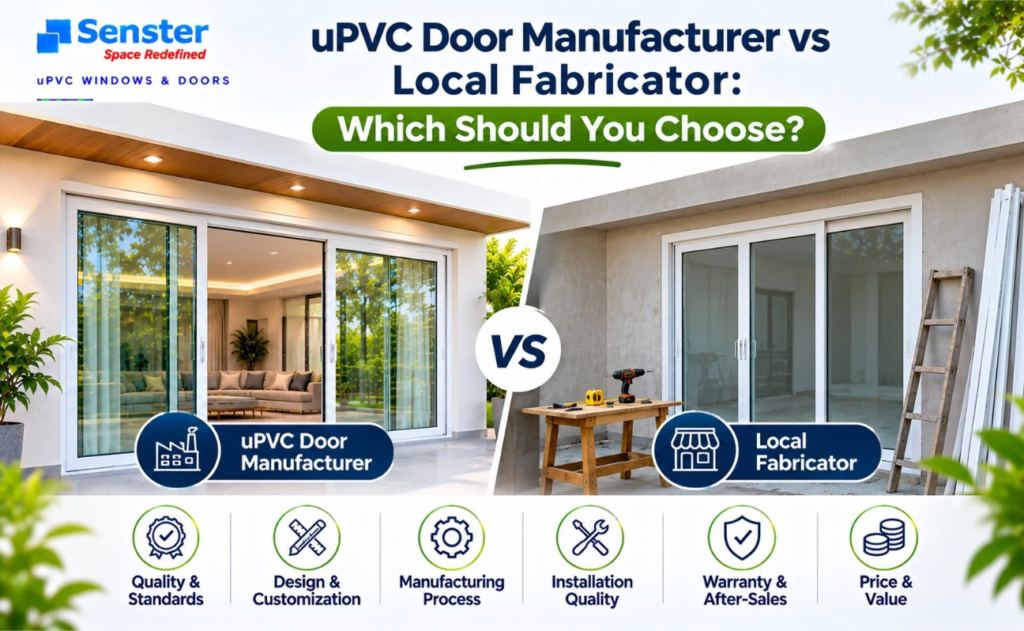
3. uPVC Door Manufacturer vs Local Fabricator: Key Differences
Let’s compare both options across the factors that matter most to homeowners.
| Comparison Factor | uPVC Door Manufacturer | Local Fabricator |
|---|---|---|
| Production process | May follow structured manufacturing procedures | Depends on workshop practices |
| Profile selection | May offer defined profile systems | Depends on supplier relationships |
| Customization | Available within system specifications | May offer flexible customization |
| Fabrication | May use dedicated machinery and processes | Depends on equipment and experience |
| Quality control | May have defined inspection procedures | Depends on individual practices |
| Hardware | Depends on selected product system | Depends on sourced components |
| Installation | May have dedicated installation teams | May use in-house or external teams |
| Warranty | Should provide clear written terms | Depends on the business |
| After-sales support | Depends on service arrangements | May offer convenient local support |
| Pricing | Depends on specifications and service scope | May offer flexible pricing |
Neither option is automatically better. You should evaluate the actual product and service quality before making your decision.
4. Difference in uPVC Profile Quality
The profile is the main frame structure of a uPVC door. Its specifications influence the door’s appearance, structural performance, and suitability for different applications.
Different profile systems may vary in:
- Profile dimensions.
- Internal chamber design.
- Material formulation.
- Structural specifications.
- Hardware compatibility.
- Available colours and finishes.
A professional manufacturer may work with defined profile systems and recommend suitable options according to the door dimensions and intended application.
A local fabricator may also use good-quality profiles, but homeowners should verify the exact profile specifications.
Before placing an order, ask:
- Which profile system is being used?
- What are its specifications?
- Is it suitable for my door dimensions?
- Is reinforcement required?
- What warranty applies?
Don’t assume that every door described as premium uPVC has identical specifications.
5. Difference in Manufacturing and Fabrication Quality
The way a uPVC door is fabricated can influence its appearance, alignment, and everyday operation.
Even good-quality profiles can produce disappointing results if the fabrication process is not handled correctly.
A professional manufacturing process may include accurate cutting, frame assembly, joining, hardware fitting, and final inspection.
A skilled local fabricator can also achieve excellent results by following appropriate fabrication procedures.
When evaluating either option, check the following:
Accurate Cutting: Profile sections should be cut according to the approved dimensions.
Proper Frame Assembly: Door frames and shutters should be assembled according to the selected system’s specifications.
Joint Quality: Corner joints should have a consistent and clean finish.
Reinforcement: Suitable reinforcement should be provided wherever technically required.
Glass Fitting: Glass should be installed correctly using compatible components.
Hardware Installation: Handles, hinges, rollers, and locks should operate properly.
Final Finishing: The finished door should have a neat appearance without visible fabrication defects.
If possible, inspect a sample door or visit a completed project before confirming your order.
6. Difference in Customization Options
Every home has different architectural requirements.
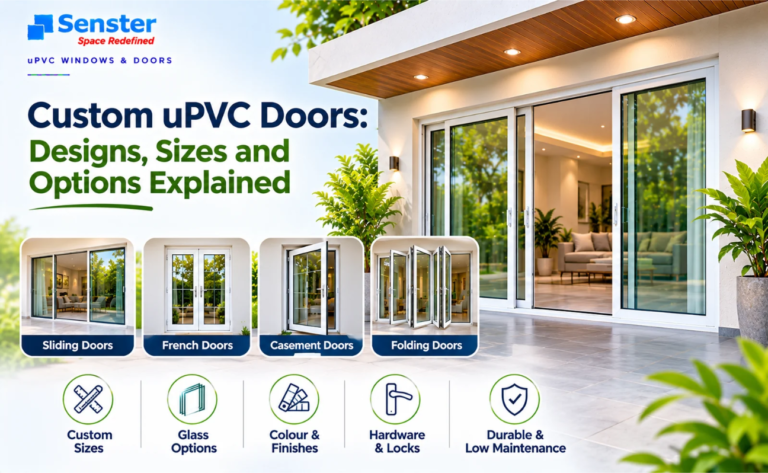
A balcony may require a sliding door, while a villa may need French doors or a folding door system.
Both manufacturers and local fabricators may offer customization depending on their technical capabilities.
Common uPVC door options include:
uPVC Sliding Doors
Sliding doors move horizontally along tracks and are suitable for balconies, patios, and living room openings.
uPVC French Doors
French doors generally feature two hinged shutters with glass panels and can create an elegant entrance to outdoor spaces.
uPVC Casement Doors
These doors operate using hinges and are suitable for selected residential applications.
uPVC Folding Doors
Folding doors consist of multiple panels that fold to one side or both sides, depending on the system.
Customized Door Sizes
Doors can be manufactured according to verified site measurements, subject to the technical limitations of the selected profile and hardware system.
When comparing suppliers, ask whether they can meet your design requirements without compromising the suitability of the door system.
7. Difference in Glass and Hardware Options
Glass and hardware are two important components of a uPVC door.
They influence natural lighting, privacy, safety, convenience, and the overall performance of the finished product.
Glass Options
Depending on the application, you may consider:
- Clear Glass: Suitable for areas where natural light and outdoor visibility are priorities.
- Frosted Glass: Useful for spaces where additional privacy is required.
- Toughened Glass: Suitable for applications requiring safety glazing.
- Laminated Glass: Can be considered for specific safety and security requirements.
- Double Glazing: Uses two glass panes separated by a sealed cavity and can improve thermal and acoustic performance when properly specified.
- Solar-Control Glass: Can help manage solar heat entering through doors exposed to direct sunlight.
Hardware Options
Hardware may include:
- Handles.
- Hinges.
- Sliding rollers.
- Tracks.
- Locking mechanisms.
- Multi-point locking systems, where compatible.
A professional manufacturer should specify the components included in the quotation.
A local fabricator should also be able to explain the source and specifications of the hardware being supplied.
Never compare two quotations without checking whether the glass and hardware specifications are similar.
8. Difference in Installation Quality
Installation is one of the most important factors affecting the performance of uPVC doors.
Even a well-manufactured door can develop problems if it is installed incorrectly.
Some common installation-related problems include:
- Poor frame alignment.
- Difficulty opening and closing.
- Improper sealing.
- Water infiltration.
- Air leakage.
- Locking problems.
- Uneven gaps around the frame.
A professional installation process generally includes:
- Accurate measurement of the opening.
- Inspection and preparation of the site.
- Correct frame positioning.
- Proper alignment and secure fixing.
- Glass and hardware installation.
- Suitable sealing and drainage arrangements.
- Final testing of door movement and locking.
A manufacturer may provide dedicated installation teams, while a local fabricator may handle installation directly.
However, the company name alone doesn’t guarantee installation quality. Check the team’s experience and previous work.
9. Which Option Is Better for Hyderabad’s Climate?
Hyderabad experiences hot summers, dust, and seasonal rainfall. These conditions should be considered when selecting uPVC doors.
Both manufacturers and local fabricators can supply suitable door systems if the correct specifications are selected.
Here are some important considerations.
Managing Summer Heat
Doors with large glass panels may allow considerable sunlight into indoor spaces.
Discuss suitable glazing options, particularly if your balcony or patio receives strong afternoon sunlight.
Handling Seasonal Rainfall
Proper frame installation, sealing, and drainage arrangements are important for exterior-facing doors.
Ask how the selected system is designed to manage water infiltration.
Managing Dust
Sliding tracks can accumulate dust over time. Choose a design that is convenient to clean and maintain.
Reducing Outside Noise
If your home is located near a busy road or commercial area, suitable glass and effective sealing may help reduce outside noise.
The overall performance depends on the complete door system rather than whether it comes from a manufacturer or fabricator.
10. Difference in Pricing: Manufacturer vs Local Fabricator
Price is often one of the biggest reasons homeowners compare manufacturers and local fabricators.
Some buyers assume local fabricators are always cheaper, while manufacturers are more expensive.
However, this isn’t necessarily true.
The final price depends on the specifications, materials, fabrication process, hardware, and installation services included.
The major pricing factors include:
- Door dimensions.
- Door configuration.
- Profile specifications.
- Glass type.
- Hardware and locking systems.
- Reinforcement requirements.
- Frame colour and finish.
- Transportation.
- Installation charges.
- Additional site work.
For example, a basic sliding balcony door may cost less than a large folding door with specialized glass and hardware.
How to Compare Quotations
When requesting quotations from different suppliers, compare the following:
| Quotation Detail | What to Verify |
|---|---|
| Profile | Brand or system specifications |
| Door design | Sliding, French, casement, or folding |
| Glass | Type, thickness, and configuration |
| Hardware | Handles, locks, hinges, and rollers |
| Reinforcement | Whether required and included |
| Installation | Labour and fixing charges |
| Transportation | Whether delivery is included |
| Warranty | Written coverage and conditions |
| After-sales service | Maintenance and repair support |
A slightly higher quotation may offer better value if it includes suitable components and professional installation.
Always compare similar specifications rather than choosing based only on the final amount.
11. Difference in Warranty and After-Sales Support
A uPVC door is a long-term investment, so warranty and after-sales support should not be overlooked.
Over time, certain components may require servicing or replacement.
For example:
- Sliding rollers may need adjustment.
- Handles may become loose.
- Locks may require servicing.
- Rubber seals may wear out.
- Hinges may need adjustment.
A manufacturer may offer structured warranty arrangements, while a local fabricator may provide convenient local servicing.
However, both should clearly explain their responsibilities.
Before ordering, ask about:
- uPVC profile warranty.
- Glass warranty, where applicable.
- Hardware warranty.
- Manufacturing defects.
- Installation-related issues.
- Warranty exclusions.
- Replacement component availability.
- Service request procedures.
Always request written warranty details.
Don’t rely entirely on verbal promises.
12. When Should You Choose a Professional uPVC Door Manufacturer?
A professional manufacturer may be a suitable choice when:
- You’re installing multiple doors in a new villa.
- You’re planning a large residential project.
- You require different door configurations.
- You want clearly documented product specifications.
- You need coordinated manufacturing and installation.
- You prefer defined warranty arrangements.
- You want a supplier experienced in handling larger projects.
For bigger projects, consistent specifications, production planning, and proper coordination can make the process easier.
13. When Can a Local Fabricator Be a Good Choice?
A local fabricator can also be a good option in certain situations.
Consider a local fabricator when:
- You need only one or two doors.
- You’re replacing an existing door.
- You require a straightforward design.
- The fabricator has relevant experience.
- Suitable profiles and hardware are available.
- Installation quality can be verified.
- After-sales support is accessible.
A smaller business should not automatically be considered an inferior option.
An experienced fabricator with proper equipment, suitable materials, and good workmanship can deliver quality results.
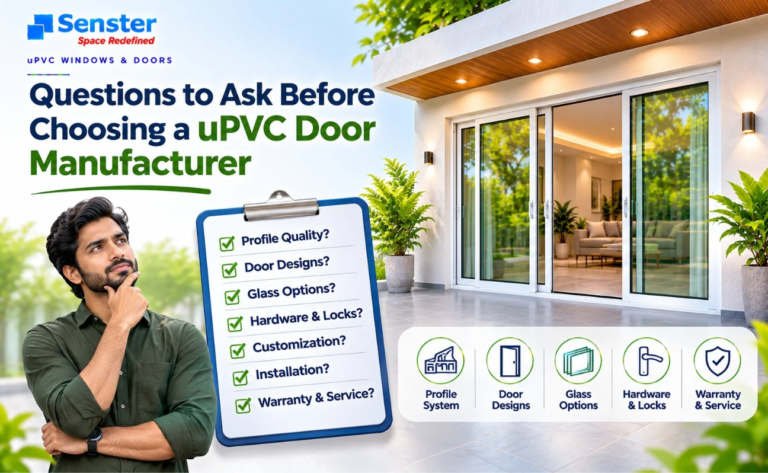
14. Questions to Ask Before Finalizing Your Supplier
Whether you choose a manufacturer or local fabricator, ask these questions before placing your order.
- Which uPVC profile system will be used?
- What are the profile specifications?
- What door designs are available?
- Which glass options are included?
- What hardware and locking systems will be provided?
- Is reinforcement required?
- Who will manufacture or fabricate the doors?
- Will measurements be taken at the property?
- Who will handle installation?
- What is included in the quotation?
- What warranty is provided?
- Who handles after-sales service?
- Can I see completed projects?
- What is the expected delivery timeline?
A supplier who answers these questions clearly can help you make a more confident decision.
15. Common Mistakes to Avoid When Choosing a uPVC Door Supplier
Before making your final decision, avoid these common mistakes.
Choosing only by price: A lower quotation may include different profiles, glass, or hardware.
Ignoring product specifications: Always understand the materials and components being supplied.
Overlooking installation: Poor installation can affect the performance of a quality door.
Not checking previous projects: Ask for examples of completed work.
Ignoring warranty conditions: Understand what is covered and who handles service requests.
Not getting a written quotation: Make sure all specifications and charges are documented.
Taking these precautions can help you avoid unnecessary complications after installation.
Why Consider Senster Building Systems?
At Senster Building Systems, we provide uPVC windows and doors in Hyderabad for apartments, villas, independent houses, and commercial projects.
We understand that choosing a door involves more than selecting an attractive design. The right solution should match your opening dimensions, architectural requirements, glass preferences, hardware needs, and project budget.
Our team can help you explore suitable options based on:
- Door dimensions and configurations.
- Sliding and hinged designs.
- French and folding door options.
- Profile specifications.
- Glass requirements.
- Hardware and locking arrangements.
- Installation requirements.
- Project budget.
Our product options include uPVC sliding doors, balcony doors, and other suitable configurations based on the selected system.
Senster also provides aluminium windows and doors for projects where aluminium may be more appropriate.
Our approach focuses on understanding project requirements, recommending suitable systems, accurate measurement, professional installation, and customer support.
Final Thoughts
So, should you choose a uPVC door manufacturer or a local fabricator?
The answer depends on your project size, design requirements, budget, and expectations for product quality and service.
A professional manufacturer may offer structured production processes and defined product systems. An experienced local fabricator may provide flexibility, customization, and convenient local support.
However, neither option guarantees quality by itself.
Before making your decision, compare the profile specifications, glass, hardware, fabrication quality, installation, warranty, and after-sales support.
The best supplier is not necessarily the biggest company or the cheapest option. It is the one that provides a properly specified door system, installs it correctly, and takes responsibility for the work.
Looking for uPVC Doors in Hyderabad?
Senster Building Systems provides uPVC windows and doors for residential and commercial projects in Hyderabad.
Address: Survey No. 126, Dommarapochampally, Gandimaisamma, Medchal-Malkajgiri District, Hyderabad, Telangana – 500043
Phone: +91-8096267091 / +91-9959216869
Email: hello@senster.in
Contact Senster Building Systems to discuss your requirements, explore suitable door designs, and request a project-specific quotation.
Website: www.senster.in